What is the meaning of life?
In school we were taught the acronym MRS NERG. From memory, life is movement, respiration, sensation, nutrition, …, reprodution, and growth. I forget what E stood for.
To this one might like to add a meaning. I would want my life to have a meaning for others. And I would like to experience meaning within life. I would like to experience events in my life as meaningful, and my own actions and intentions within life as meaningful.
The meaning, naturally, is to love and be loved. Within families and communities of love, may we discover the divine dimension. May we love love itself, and mean meaning itself, intend to live lives of intention, and leave the legacy of having intended to have left a legacy.
Put this way, the meaning of life is revealed as insularly circular. How indeed can one love ones neighbour with a view to the wider context of love? It seems plausible but is unsustainable. It makes love, life, or religion a pyramid scheme, in which the only point of loving is to introduce someone to a wider context, to grow and expand and expire and retire into meaninglessness.
It is better to love ones neighbour as love itself, and to love them for their own sake. It is better to live a life that has no meaning beyond itself, but to appreciate the meaninglessness of this moment. Then will all that which can be called “beyond” reveal itself here and now.
I just asked Google translate about the meaning of life and got the output “he withdrew and waited to die”. I read that as a very sincere and pious answer. One should feel deeply the meaninglessness of life. One should withdraw and prepare for death.
Now, every little thing can have a profound meaning. The typical idea in our culture is that moments only bear the meaning one gives them. True as this may be, one should realize that the “giving” of meaning is experienced retrospectively. I give a moment meaning, and only afterwards realize what meaning I quite unintentionally gave it. So the meaning unfolds with a kind of inner necessity, only it turns out that I gave it that.
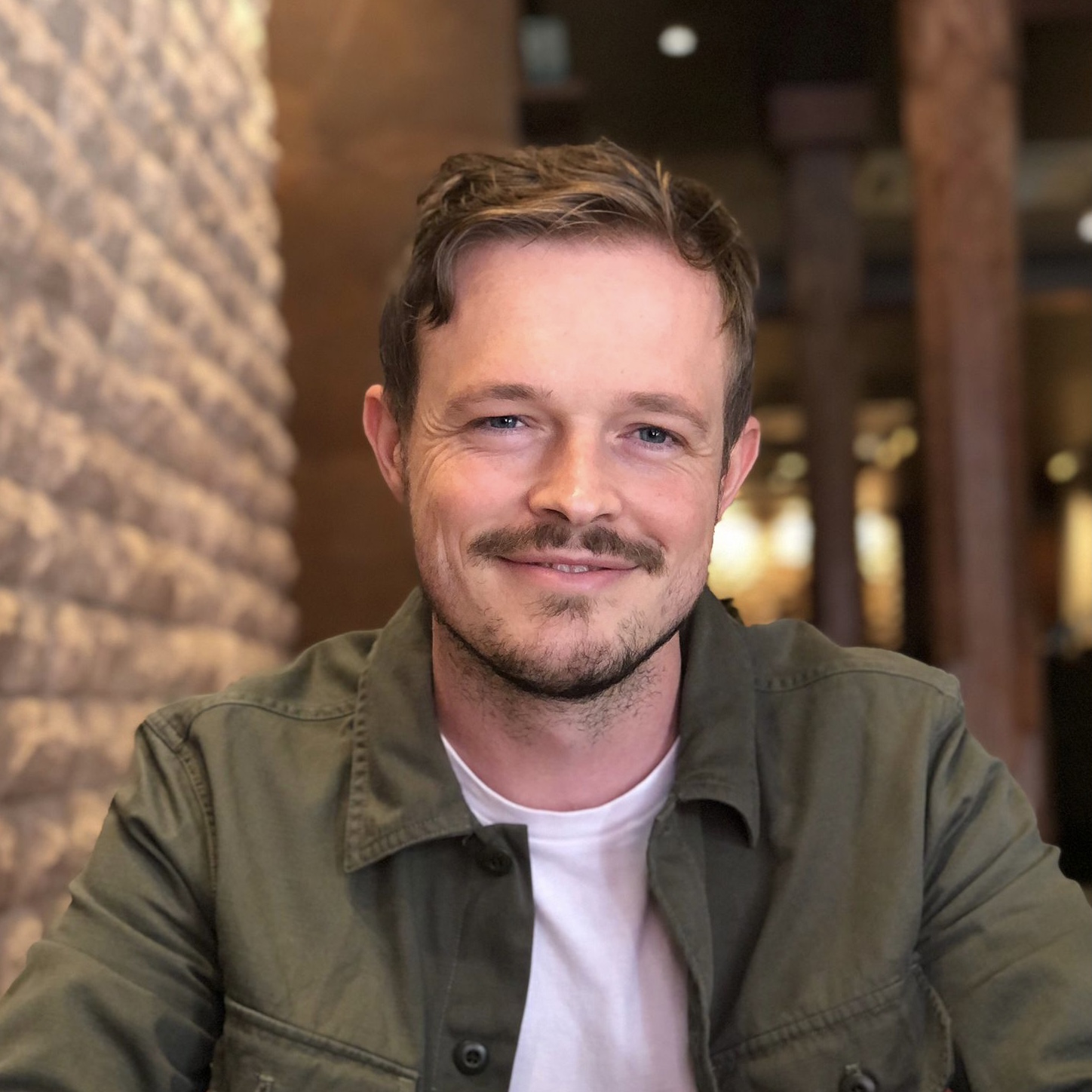
For example, my right wrist just flashed with a blue light, as an angel portended the significance of my writing right here. I marvelled at this, and felt the deep significance of my sitting here — at Ground Floor coffee in Shoreditch, Maggie having kindly given me an hour’s free time, with delicious and overly hot mint tea in a take-away cup next to me, and an attractive woman sat opposite me whom I’m trying not to look at, with a soft sofa on my bum and the world at my finger tips – not only did the everyday world have a sheen of beauty, but supernatural light shone on my wrist as I considered what next to write. For a more meaningful moment one could hardly ask.
Yet I fully accept the idea that I give all this meaning. I have counted coffee shops as special or meaningful places since my youth pastor took me there and talked with me as if I were an adult. I have decided to accept that mint tea is lovely. I have decided that soft sofas are nice. I have invested in all these pleasures, have acquiesced to the contemporary music scene that booms through that speaker on the wall, have intentionally invested in my sexuality such that this woman opposite me seems attractive. It’s all layered in structures of meaning and significance in which I have played an active role, have chosen at every respect, through timeless history.
Yet I experience all of it as a given. The meaning was given in the present past, and in the active present of here and now, what a beautiful world I live in. My every thought I experience as a given. As I wrote that, this whole room just flashed as if someone took a photo. I don’t think anyone else noticed.
This moment may have a meaning beyond itself. But that wider meaning is now contained within itself. The whole world is contained in these words, this thinking I am undertaking as I blog. Mother Mary is sat next to me on this sofa. One could turn the thought around: the whole world gains its significance in relation to this little moment.
Even Mary’s sitting here is as a matter of my thought. But my thought is a matter of Mary’s obedience. This is our absolutely historically novel moment of thinking: that we perceive in the moment of our thinking its utter dependence on all history. We were encouraged in our education to develop a critical view and have our own opinions. But the hubris of all this fell away under our feet within a few generations, especially in the light of the abomination of the British Empire. Our own critical view point was just a slew of other people’s thought – the thinking of the emperor, the prince of this world, the beast. The one who thinks they think their own thought thinks the thought of the human ego, the subtle lie that has pervaded human historic thinking.
The one who sees that they think a living historical thought finally thinks an utterly novel thought. We live in an Eden that is finally before succumbing to Satan’s temptation. This mint tea is my tree of life. Its leaves are for my healing and for the healing of the nations.
I’d like to say something new about the meaning of life. I’d like to present Google’s idea — to withdraw and wait for death — in a soft and gentle light that doesn’t sound cynical. Not only is there no meaning in life such that one needs to create meaning, or find simple meaning in the here and now, but even that meaning is pretentious. Neither is it a depressing fact that there is no meaning in life and we should all give up. The insight is that a search for meaning in life is an idea that has only lived for a couple hundred years in human history. The idea of “meaning” is a secularization of holiness or goodness, effected most singularly by Nietzsche. Leahy lays that out in Faith and Philosophy.
There is no meaning in life because life isn’t meant to mean. Words, sentences, or books have meaning. Life on the other hand is good. Is life good? It’s very good. But it’s an Eden that is before the knowledge of good and evil. Is it good as opposed to evil? Not particularly. Is it very good? Yes. Should we go out there and try and experience and delve into life’s goodness? We will never stop saying so. But it is better to retreat, enjoy the little you have, and wait to die.
To withdraw and wait for death takes heroic courage. The heart of such monastic endeavour is what is actually described in an epic such as Odysseus. The cyclops for example is an ancient image of the power of the pineal gland, which is primarily encountered in monastic meditation. Medusa is a mythic image of a demon possessed woman. The myths and legends of east and west are self-consciously such, unlike the Hebrew scriptures which describe actual miracles.
Ah, another example comes to mind: Icarus. To fly near the sun is a metaphor for meditating on the great inner sun, the focus of all great ancient religions. The inner sun is the fact that all energy flows through my solar plexus. It is to experience the energy of all in all as a ball of light within myself. Icarus is a warning about idolizing this experience. All that ancient thinking can say (to speak hyperbolically) in response to this problem is: “balance, be careful, everything in moderation”. At the end of days we can say: “surrender entirely to Jesus”, and now we can say “live entirely here and now”.
What’s the point in withdrawing and waiting for death? It makes for a life of peace and serenity. It removes the idolatry of purpose and meaning from life. It lets life live. It lets life move, respire, reproduce, and grow.
 Iain Atkinson
Leave a comment